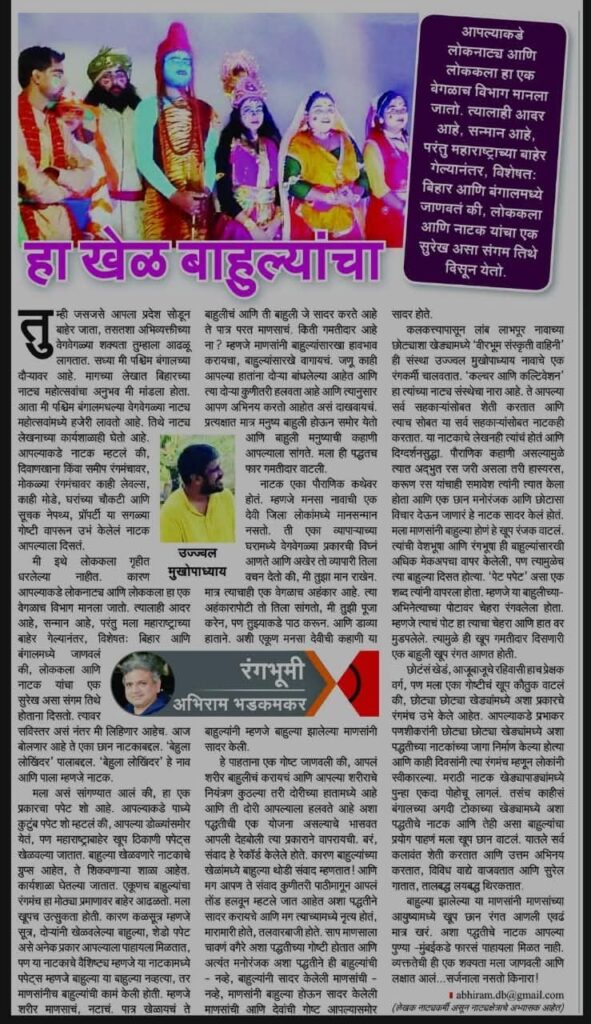
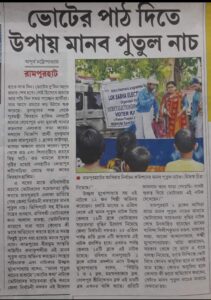
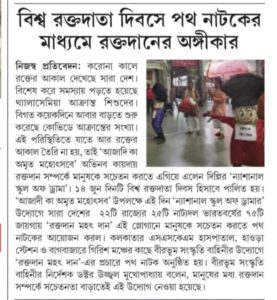
This feature article discusses the unique theatrical production “Manab Putul” (Human Puppet) by Birbhum Sanskriti Bahini and its creator-director Ujjal Mukhopadhyay.
The writer begins by observing that while Maharashtra has a rich tradition of folk theatre and performance arts, remarkable theatrical experiments are also taking place in other parts of India. One such example comes from Birbhum, West Bengal, where a distinctive form of puppet-inspired theatre has been developed.
About “Manab Putul” (Human Puppet)
Unlike traditional puppet shows that use wooden or cloth puppets, Manab Putul uses live actors who perform as if they were puppets. Through controlled body movements, stylized gestures, and special performance techniques, the actors create the illusion of puppet characters coming to life on stage.
The article explains that this theatrical form draws inspiration from Bengali folk traditions and local storytelling practices. The actors deliberately limit and structure their movements to mimic the mechanics and visual language of puppetry.
Ujjal Mukhopadhyay’s Innovation
The feature highlights Ujjal Mukhopadhyay as the driving force behind this theatrical experiment. The author notes that he spent years researching folk traditions and developing a performance style that combines:
- Folk theatre
- Storytelling traditions
- Puppet aesthetics
- Contemporary stagecraft
- Social and cultural themes
The result is a theatrical language that is both innovative and rooted in local culture.
Themes and Storytelling
The article states that the production is not merely a technical experiment. It also tells meaningful stories drawn from:
- Bengali folklore
- Rural life
- Human relationships
- Social issues
- Traditional cultural narratives
The performance style helps audiences engage with these stories in a fresh and memorable way.
Recognition and Impact
The writer notes that the production has been staged extensively in different parts of India and has attracted considerable attention from theatre lovers and cultural critics.
What makes the production special, according to the article, is its ability to bridge traditional folk culture and modern theatre while remaining accessible to audiences of all backgrounds.
Artistic Merit
The article praises:
- The discipline of the actors
- The precision of movement
- The originality of the concept
- The visual impact of the performances
- The preservation of folk-cultural traditions
The author argues that such productions demonstrate how local cultural forms can be transformed into innovative contemporary theatre without losing their roots.
Conclusion
The article concludes that “Manab Putul” is a rare and significant theatrical achievement. It showcases the creative potential of Indian folk traditions and stands as an example of how cultural heritage can inspire new forms of artistic expression.
The writer regards Birbhum Sanskriti Bahini’s work as an important contribution to Indian theatre and a model for future experimentation rooted in traditional culture.