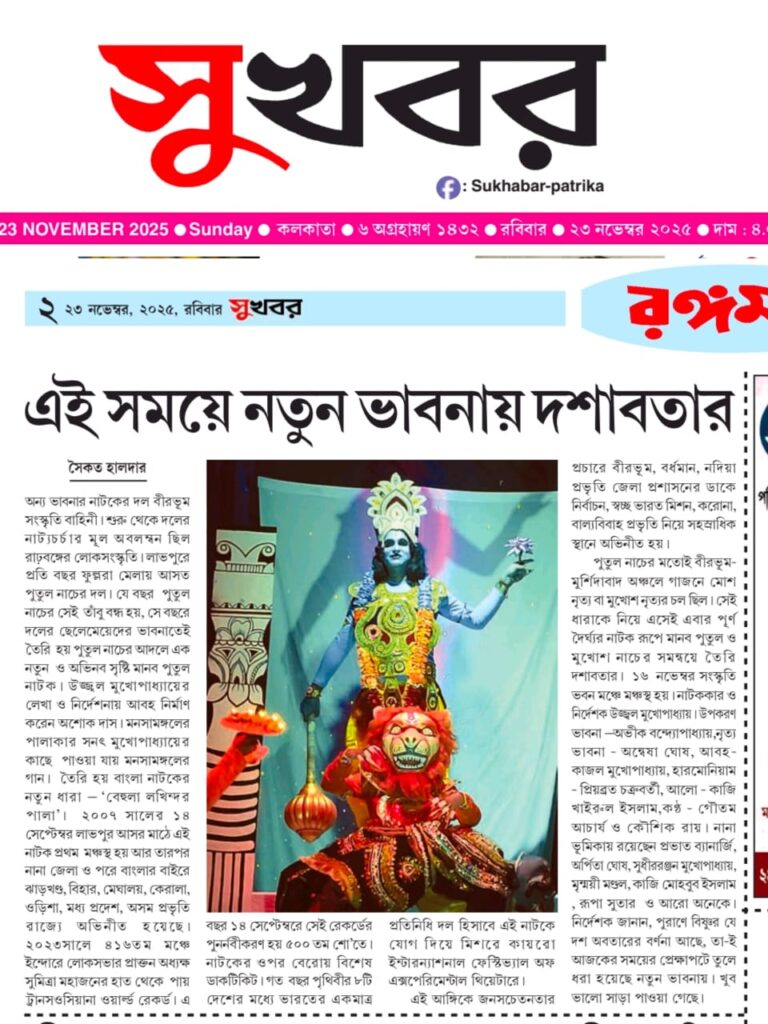
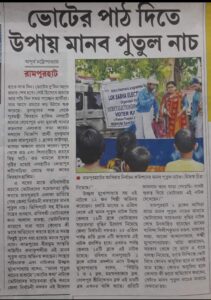
Birbhum Sanskriti Bahini has long been known for its work in preserving and reinventing traditional folk theatre. Among its most notable creations is the Human Puppet Theatre, inspired by Bengal’s rich puppet theatre traditions.
The article explains that while traditional puppet theatre often faced challenges in attracting new generations, Birbhum Sanskriti Bahini sought to revive the form by transforming it into a live theatrical experience where actors themselves become “human puppets.” This innovative approach led to the creation of the acclaimed production “Behula–Lakhindar Pala.”
Written and directed by Ujjal Mukhopadhyay, the play is based on the legendary Manasamangal narrative. Rather than presenting the story in a conventional manner, the production combines:
- Human puppet theatre techniques
- Folk music traditions
- Dance and movement
- Traditional storytelling
- Visual theatrical spectacle
The production first premiered on 14 September 2007 in Labhpur and has since been staged extensively across India, including West Bengal, Jharkhand, Bihar, Odisha, Assam, Madhya Pradesh, and several other states.
The article notes that the production achieved a major milestone when it received recognition from World Records authorities, making it one of India’s most distinguished folk-theatre-based productions.
In 2025, a new and expanded version of the production was presented, drawing inspiration from the Dasavatar (Ten Incarnations of Vishnu) tradition. The performance integrates mythology, folk aesthetics, and human-puppet techniques to create a visually striking theatrical experience.
The cast includes numerous performers portraying mythological characters, supported by elaborate costumes, makeup, music, choreography, and stagecraft. The article highlights the contributions of the artistic team, musicians, technicians, and actors who helped bring the production to life.
Director Ujjal Mukhopadhyay states that the aim is not merely to preserve tradition but to present it in a contemporary form that can engage modern audiences while retaining its cultural roots.
The report concludes by noting that the new production has been warmly received by audiences and represents another important step in Birbhum Sanskriti Bahini’s continuing effort to promote Bengal’s folk heritage through innovative theatre.